
Chicago UBF
>
Poetry and Wisdom
>
Psalms 8:1-9
2025 Summer Series-1: “Made Like Him”
- by P. Mark Vucekovich
- May 26, 2025
- 657 reads
Question
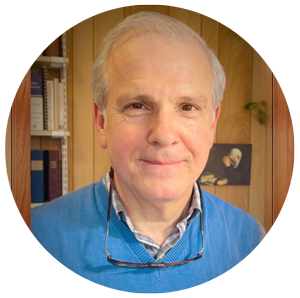
Messenger: Mark Vucekovich (Chicago UBF Senior Pastor)
MADE LIKE HIM
*Introduction to Summer 2025 Special Series in Psalms: (Click)
Psalm 8:1–9 (ESV)
Key Verse: 8:5, "Yet you have made him a little lower than the heavenly beings and crowned him with glory and honor.”
- What does the psalmist first say about God (1), and what does this mean? How does God work in the world, and for what purpose (2)? How was this fulfilled in the ministry of Jesus (Matt.21:15–16)?
- What does the psalmist look at, what questions does it lead him to ask (3–4), and why? In what way has God made human beings, and what does this mean (5; Gen.1:26–27)?
- What else has God done for human beings (6–8; Gen.1:28), and why is this so remarkable? What kind of “dominion” does God want us to have in the world today?
- How do verses 4–6 look forward to the coming of Jesus (Heb.2:6–9)? How does he restore us to God’s creation purpose for us (Col.3:10; Rom.8:29; 2 Cor.3:18)?
- Read verse 9. How does our restoration in the image of Jesus reveal God’s majesty in all the earth? Why is it so important to praise him?
File attachments:
Message
MADE LIKE HIM
Psalm 8:1–9
Key Verse: 8:5, “Yet you have made him a little lower than the heavenly beings and crowned him with glory and honor.”
Have you ever done a restoration project? A kitchen, a bathroom, or maybe a whole house, inside and out? At first it seems impossible. We’re scared and have no vision of what the ugly, smelly, dilapidated place could be. But with imagination, creativity, resourcefulness, and a lot of hard work––and cost––the place gets transformed into something beautiful. It’s a kind of allegory for the gospel. Today we’re going to be thinking about restoration, or transformation: not of living spaces, but of human beings. Psalm 8 is about creation in general, but it especially points us to Jesus and the transformation he brings. It reveals God’s greatest majesty, his greatest glory––to make us like Jesus. Really? How can we experience this? May God speak to us through his word.
Today we begin our Summer Series in the Psalms with Psalm 8. What’s the context of this Psalm? Psalms 1 & 2 begin all the Psalms with God’s ideal man and God’s ideal king. Then, Psalms 3–8 contain some of David’s laments and cries for help. But Psalm 8 is the first one with no lament, no cry; it’s all about praise to God. It begins and ends with an exclamation, “O LORD, our Lord, how majestic is your name in all the earth!” (1a,9) Let’s first think about his name. In Hebrew it begins, “O Yahweh, our Adonai”––two very different words for God. “Yahweh” is a word based on the name God gave of himself: “I AM WHO I AM” (Ex.3:14). In reverence for his holiness, Moses abbreviated it to “Yahweh.” In a sense, this “name” of God refers to his eternal being. But it also came to mean the personal, loving God who came to deliver his people from their groaning in Egypt. Yahweh is the God who sees, knows, and cares for each human being. He’s the LORD who created the Garden of Eden for Adam. In the Book of Psalms this name for God, “Yahweh,” is used most often in the Bible––over 700 times! When we experience who this God is, we cannot but shout praises to him.
Next, let’s think about the word “majestic.” “Majestic” is the major theme of Psalm 8. “Majestic” is something vast, like the oceans or tallest trees. It also came to be used to describe kings. It means “great,” “noble,” or “powerful.” In verse 1 the words “majestic” and “glory” are similar. The point here is, God’s “name” is “majestic” in “all the earth.” It means all of creation reveals God’s character: the glory, greatness and almighty power of God. Verse 1b adds, “You have set your glory above the heavens.” God’s glory is above and beyond even the highest things in creation. In majesty and glory, no one and nothing else even comes close to the LORD. He is above all. We all need to see and to praise him.
Look at verse 2. At first these words are not easy to understand. But they help us see how God works. The LORD is so majestic, so mighty, so glorious. And yet he chooses to work through “babies” and “infants.” They symbolize the weakest, most humble people. In contrast, David mentions “the enemy” and “the avenger.” They are scary. David calls them “your foes,” foes of God, people opposed to God. Why are they God’s foes? Because they are so strong, they think they can challenge God, do better than God, or even “get back at God.”
Verse 2 says God “stills” these foes. How? It’s not through exerting his almighty power, but through the mouths of babies and infants––God establishes strength through them. Why? Because they don’t depend on their own strength, clever minds, or abilities. They depend on the majestic name of God, in childlike trust. Our Lord Jesus quoted this verse when he entered Jerusalem and the children were crying out in the temple, “Hosanna to the Son of David!” (Matt.21:15–16) Through these children’s praises God stilled the chief priests’ and scribes’ criticisms of Jesus. Apostle Paul knew firsthand that this is how God works, so he wrote, “For when I am weak, then I am strong” (2 Cor.12:10).
Now let’s read verse 3. When we look up at a clear night sky, we’re staring at just some of the majesty of God. The moon itself is so stunning, so profound. The stars splashed across the sky seem so deep and so endless. Yet God made them all, with just his fingers! He’s so powerful, it was like nothing for him. Gazing up at a starry night sky can make us, in comparison, feel insignificant.
So David asks a question. Read verse 4. Here the Hebrew word for “man” is “enosh.” It refers to humans in all our frailty and weakness. The parallel words, “son of man,” are literally “son of Adam.” In Hebrew, “Adam” is similar to the word “dust.” So it’s really, “son of dust,” even more lowly. In great contrast to us is God our Creator. He doesn’t need to be bothered with us. But he’s so mindful of each human being. He cares so much for each person. Why? He formed us out of the dust of the ground, breathed into us the breath of life, and made us a living creature (Gen.2:7). We’re so fragile, we can’t even understand how we stay alive. Like the psalmist, all we can say is that we’re just part of the majesty of God.
But there’s more. Read verses 5–8. This goes back to the original creation. After God created a beautiful and perfect ecosystem, with everything in its ordered place, all working in harmony, and all the land animals, he said, “Let us make man in our image, after our likeness. And let them have dominion over the fish of the sea and over the birds of the heavens and over the livestock and over all the earth and over every creeping thing that creeps on the earth” (Gen.1:26). Like the animals, we’re all vulnerable, frail and weak. But unlike them, God made us in his image and gave us dominion over all the earth. He made us a little lower than the heavenly beings and crowned us with glory and honor. What is this glory and honor? It’s the privilege of knowing God, of growing in his image and serving under him in godly dominion over all his creation. The creation of human beings in his image as caretakers of his world is another way God reveals his majesty.
But because of sin we all fell far from God’s original plan and vision for us. We degraded to the animal level. We were in a meaningless struggle for survival, with an ugly sinful nature, and we brought ruin and misery to God’s beautiful creation. But read verses 4–5 again. This not only looks back at God’s original creation; it also predicts the coming of Jesus. The great and awesome Creator God is still “mindful” of us, even though we’re so sinful. He still “cares for” us, so much so that he sent his only Son to come in human form as a humble servant.
Jesus is this “Son of Man.” He was born to share in our flesh and blood, to be made like us in every respect, to be tempted as we are, and, by the grace of God, even to taste death for us. For a little while he was made lower than the angels. But now, the Son of Man is “crowned with glory and honor.” God put everything in subjection under his feet. All God’s angels worship him (Heb.1–2).
But what does this have to do with us? Everything. In this Jesus, even the most sinsick human beings can be reclaimed and restored in God’s image. Paul wrote, “Therefore, if anyone is in Christ, he is a new creation” (2 Cor.5:17a). Before believing in Jesus, we were in sin. Paul wrote elsewhere that we were dead in the trespasses and sins in which we walked. We just followed the course of this world, the spirit at work in the sons of disobedience, living in the passions of the flesh, carrying out the desires of the body and the mind. By nature we were children of wrath, like the rest of mankind. We had no power to change. But God, rich in mercy, made us alive together with Christ. He saved us by his grace, raised us up with him and seated us with him in the heavenly places. Now, we are his workmanship, created in Christ Jesus for good works (Eph.2:1–10). It’s none other than a miracle of God. It reveals the glory and majesty of God.
By faith in Christ we now “put on the new self, which is being renewed in knowledge after the image of its creator. Here there is not Greek and Jew, circumcised and uncircumcised, barbarian, Scythian, slave, free; but Christ is all, and in all” (Col.3:10–11). Through faith in Christ, our race, culture and human background no longer matter. Anyone can be made like him. In Christ, Apostle Paul had a glorious hope for all those who live by faith in him: “Just as we have borne the image of the man of dust, we shall also bear the image of the man of heaven” (1 Cor.15:49). He taught us, “For those whom he foreknew he also predestined to be conformed to the image of his Son, in order that he might be the firstborn among many brothers” (Rom.8:29). Christ is the Second Adam. His glory and honor are that God creates a new humanity through those who live by faith in him. No longer do sin and death keep spreading and reigning through us; instead, the grace of God begins to reign in life through us (Rom.5:12–21). Wow!
But how? How can weak and sinful human beings be crowned with glory and honor like Jesus? Paul writes, “And we all, with unveiled face, beholding the glory of the Lord, are being transformed into the same image from one degree of glory to another. For this comes from the Lord, who is the Spirit” (2 Cor.3:18). Our transformation happens as we behold the glory of Jesus. The more we behold him, the more the Spirit transforms us into his image. We need to behold him from the beginning of our Christian lives to the end. As we behold his glory, we receive encouragement and comfort from his love. We participate in the Spirit. We’re renewed in his affection and sympathy. We grow in his humility to count others more significant as ourselves. We even look to the interests of others. In short, we grow in the mind of Christ toward each other (Phil.2:1–5).
Being crowned with the glory and honor of Jesus, made like him, ultimately means we become children of God. This gives us great hope both for this life and for the life to come. Apostle John writes: “See what kind of love the Father has given to us, that we should be called children of God; and so we are. The reason why the world does not know us is that it did not know him. Beloved, we are God’s children now, and what we will be has not yet appeared; but we know that when he appears we shall be like him, because we shall see him as he is. And everyone who thus hopes in him purifies himself as he is pure” (1 John 3:1–3).
Read verse 6 again. Here, the word “dominion” means to rule or reign. It’s how God first created human beings: to be stewards of his world (Gen.1:28). But this dominion is not oppressive. As we come to Jesus, take his yoke and learn from him, we learn his gentle and lowly heart and find rest for our souls (Matt.11:29). We learn not to lord it over or exercise authority over others, but to humbly serve. The dominion of the Son of Man is “not to be served but to serve, and to give his life as a ransom for many” (Mark 10:45). This Jesus, the humble Servant, the Son of Man who gave his life as a ransom for us, is now crowned with glory and honor. In him we share his kind of dominion. We don’t leave a trail of wounded or crushed people in our wake. We have dominion “of the work of his hands,” of God’s life-giving, healing work. It’s a dominion that wins sinners’ hearts back to the living God. Made like him, God uses even us to bring his gospel of redemption and healing to our fellow fallen human beings. As we see the power of his gospel transforming people from all over the world, all walks of life, all life experiences, we see more and more of the majesty of the LORD in all the earth.
We human beings like to make distinctions. We set people apart by their family rank or achievements. In the church there are new believers, committed disciples, and leaders. But according to the Bible, we are all one in Christ Jesus (Gal.3:28). Here in verse 5, God crowned each human being with glory and honor by creating us in his image. Our sins left us spiritually dead, sick, and lost. But in Jesus, the Son of Man, we are made alive and recreated into his original glorious image. In Christ, each of us was created to be a shepherd like God. But we can never do it on our own. On our own we’ll only remain in our pride, our selfishness, our ugly sinfulness and self-righteousness. But as we learn to live in Christ, we begin to see ourselves in his new humanity. We begin to put on our new self each day. We begin to behold his glory. Then, through the Spirit, we draw on all his goodness. We grow in his mind, his humility, his obedience, his purity, his servant heart, his compassion. Instead of seeing others as hopeless renovation projects that we should run away from, we begin to see them, as Philip Yancey says, with “grace-healed eyes,”[1] as what they can be in Jesus.
So, are you ready for a spiritual restoration project? Are you ready to be restored in the image of our God and Savior Jesus Christ? Are you ready to become part of his humble, gracious, beautiful dominion? Are you ready to see his majesty in all the earth? Read verse 5 again. May God help each one of us experience his majesty of being made like Jesus our Good Shepherd.
[1] What’s So Amazing About Grace? (2nd Edition, 2023)
File attachments:
Note
"Why do we study the book of Psalms?"
SUMMER 2025 SPECIAL SERIES IN PSALMS
Introduction to Psalms
The Book of Psalms has 150 chapters, and they can be divided into five major parts: Part 1 is Psalms 1–41, which mainly describe personal laments and struggles to trust in God’s presence and faithfulness. Part 2, Psalms 42–72, focuses on redemption and God’s hope for the coming Messiah. Part 3, Psalms 73–89, are community laments about the seeming injustice of their suffering and national calamities, and questions about God’s covenant promises. Part 4, Psalms 90–106, proclaim God’s eternal kingship and sovereignty over all creation and history. And Part 5, Psalms 107–50, praise God for his faithfulness, redemption, and for the power of his word.
Variety of Psalms: The word “psalm” means “song.” So this Book of Psalms is kind of like a hymnbook included in the Bible. It’s good to read the Psalms aloud as prayers. Most of them, over a third, are laments, expressing grief or despair at what is happening. Some are personal laments, others are by the community, and some are in repentance. Many Psalms are hymns of sheer praise to God for who he is. Many thank God for his deliverance or blessings. Royal Psalms focus on David or his descendants. Some are called “wisdom Psalms,” others, “trust Psalms,” and some are even “imprecatory Psalms,” asking God to judge one’s enemies. There is also a set of pilgrimage Psalms, “songs of ascents” (120–134).
David’s Psalms: Over a third of the 150 Psalms have notes at the beginning. Seventy-three of them, almost half, were written by or for David, who was known as “the sweet psalmist of Israel” or “the favorite of the songs of Israel” (2 Sam.23:1). [1] Some notes refer to historical events in David’s life: as he fled from his son Absalom (Psalm 3); but mostly as he was fleeing from Saul (Psalms 18,34,52,54,56,57,59); or simply when he was in a cave or in the desert (Psalms 63 and 142). David wrote one after the prophet Nathan rebuked him for his adultery with Bathsheba (Psalm 51). David faced suffering from without, and from within due to his own sin, but through it all he turned to the living God in repentance and faith. We learn much from him.
Psalms as Poetry: The Psalms were written as Hebrew poetry. As such, they include a diverse vocabulary and rich literary devices like synonyms and antonyms, metaphors, similes and images. A key function of poetic language is to appeal to our emotions. So as we study the Psalms, we should seek to grasp not only the meaning of the words but also the emotional content of the verses. The poetry of the Psalms is meant to resonate with us and help us learn to come to God honestly, to know and love him. As we learn the words of the Psalms, we should let them shape us to have real faith in God, as well as godly emotions. In history many believers have used the Psalms in their personal devotions as well as in their worship together.
Psalms as Prophecy: As poetry, the Psalms are also considered prophetic. Up to 15 of them are prophecies about Jesus. Most famous are Psalms 2,16,22,69, and 110. Psalm 118:22–23 predicts how Jesus, the rejected stone, will become the cornerstone. Many more are prophetic teaching on how to struggle spiritually, how to trust in God in adversity, how to experience deliverance from enemies, and in all of life’s ups and downs how to simply long for God. As prophecy, the Psalms reveal God’s character and his plans for salvation and justice––his sovereignty, love, righteousness, and ultimate triumph. As prophecy, the Psalms give us hope.
Our special Summer 2025 series in Psalms
This Summer we will study ten Psalms, focusing on the ways God our Shepherd helps us. We pray that through these studies we may learn how to love and trust him more, and in all our struggles, weaknesses and challenges, to draw closer to him. We especially want to let these Psalms draw us closer to the One they all point to: our Lord Jesus Christ.
Summer 2025 Special Series in the Psalms:
June 1: Psalm 8, “Made Like Him”
June 8: Psalm 18, “He Equips Us”
June 15: Psalm 22, “He Hears Us”
June 22: Psalm 23, “He Shepherds Us”
July 6: Psalm 27, “Light and Salvation”
July 13: Psalm 46, “Refuge and Fortress”
July 20: Psalm 55, “Cast Your Burden on the Lord”
July 27: Psalm 86, “Steadfast Love”
August 3: Psalm 121, “Helper and Keeper”
August 10: Psalm 139, “Search Me and Know Me”
<footnote>
[1] A man named Asaph wrote 12, the sons of Korah, eleven, Solomon, two, Moses, Heman and Ethan, one. Forty-nine of these songs are anonymous. Some notes tell us the type of song it is. Fifty-seven of them are called “a psalm,” meaning likely to be sung with instruments. Thirty are described generally as “a song.” Others are called a “Maskil” or a “Michtam.” Other notes mention the tune or instruments to be used. Fifty-five were addressed to “the chief musician,” used in Israel’s temple worship, where musicians would play the tune and a choir would sing it.